
Learn Bioenzyme: Cleaning, Fermentation, Uses and Common Questions
Bioenzyme is a fermented liquid made from plant-based waste, particularly citrus peels, and it can be used as an important part of several household-cleaning systems.
If you are new to bioenzyme, the subject can seem confusing because the same word is often used when discussing fermentation, household cleaning, detergents and surface cleaners.
The easiest way to understand bioenzyme is to separate three things:
What bioenzyme itself is
How bioenzyme works as a cleaning component
How bioenzyme can be incorporated into different finished cleaning products
This learning hub brings together the most useful questions about bioenzyme—from citrus versus non-citrus varieties and fermentation containers to hard water, detergent foam, household-cleaning applications and common fermentation problems.

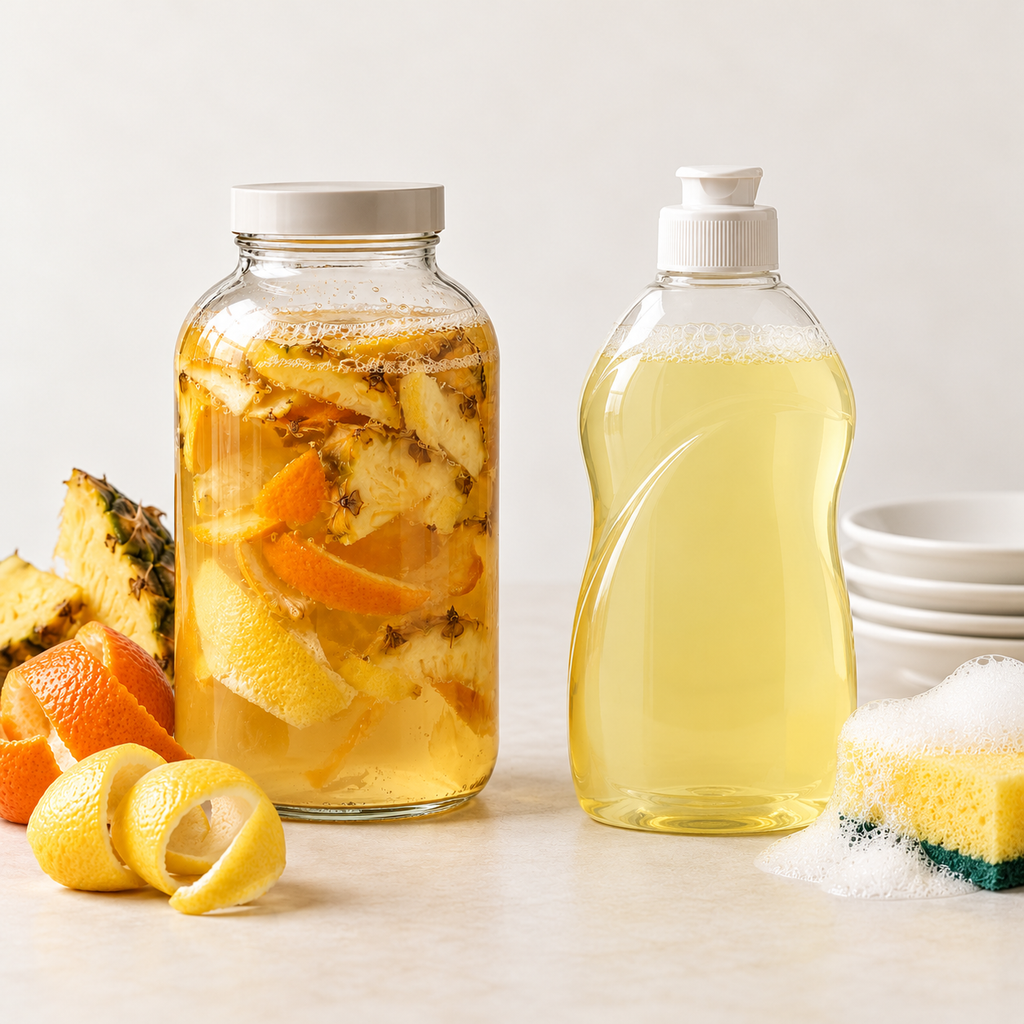
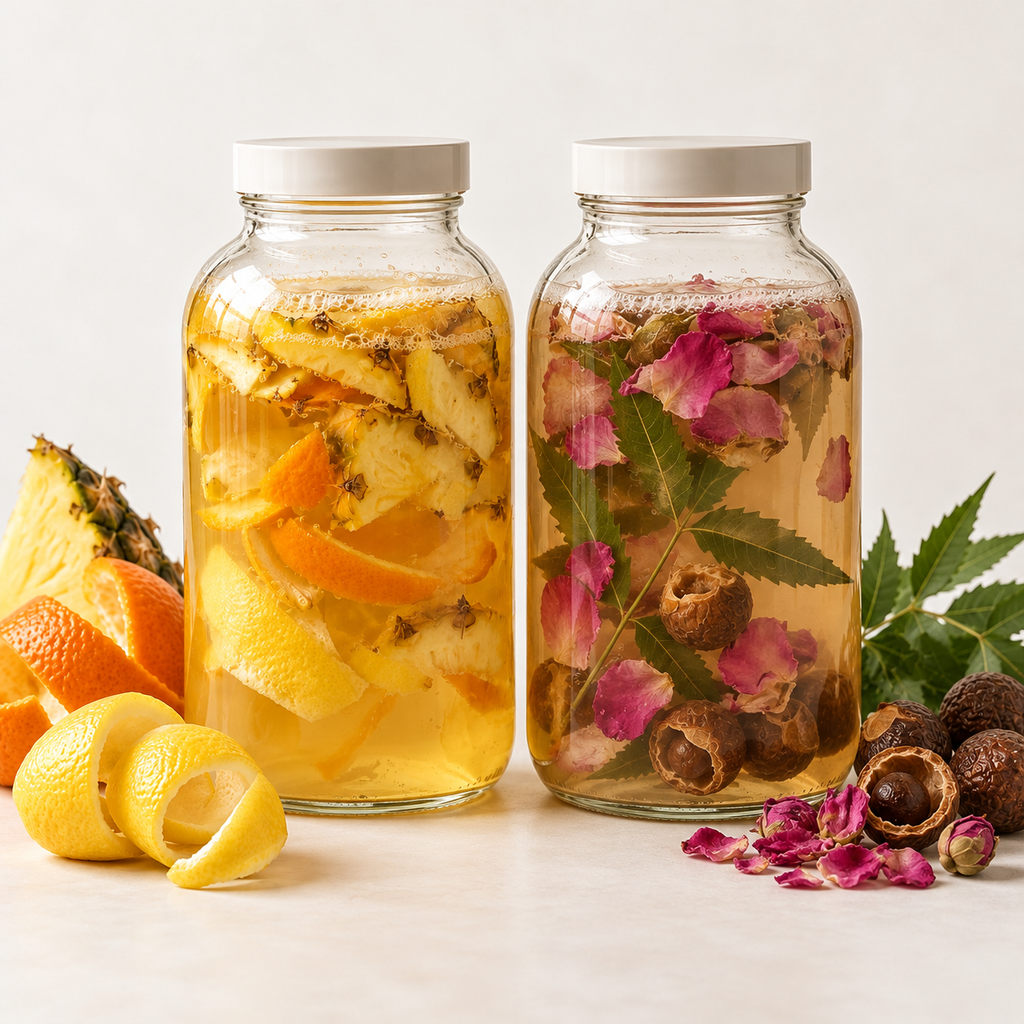
Bioenzyme is a fermented liquid produced by allowing bacteria and yeast to work on plant material in the presence of water and a suitable food source.
Citrus peels such as lemon, orange and pineapple are particularly useful for cleaning applications.
During fermentation, the character of the liquid gradually changes and becomes increasingly sour and acidic.
For cleaning, I associate this fermented liquid with helping loosen or break down difficult deposits such as grease, oils, food residue, stains and dirt.
Citrus vs Non-Citrus Bioenzyme
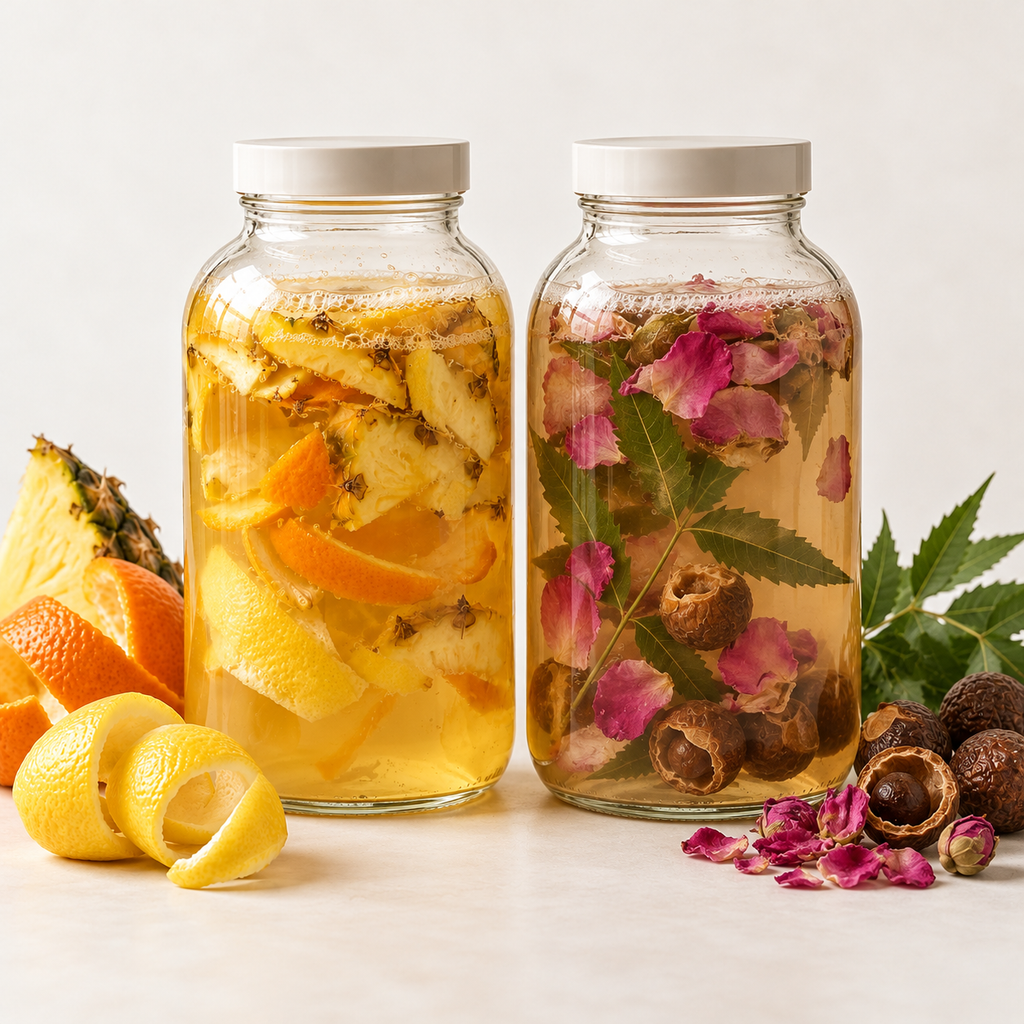
Bioenzyme does not have to be made only from citrus.
Different plant materials discussed for bioenzyme include:
Lemon
Orange
Pineapple
Rose
Neem
Reetha or soap nut
Thin leaves and flowers
Other suitable sour plant materials
However, I do not expect every bioenzyme to behave in exactly the same way.
For stronger household-cleaning applications, citrus is my first preference.
I generally find lemon, orange and pineapple bioenzymes more suitable when dealing with heavier grease, stains and dirt.
Rose, neem and reetha bioenzymes can also be useful, but they are generally considered milder and may suit different applications.
Compare the Different Types
Is Bioenzyme the Same as Detergent?
No.
This is one of the most important distinctions to understand.
Bioenzyme is a fermented cleaning component.
A finished detergent is a complete product that may contain bioenzyme along with surfactants and other functional ingredients.
Those additional ingredient categories may contribute:
Cleansing
Lather
Thickness
Hard-water performance
Product stability
Better product feel
Easier consumer use
Bioenzyme itself does not automatically provide all of these properties.
Understand the Difference
How Does Bioenzyme Help With Cleaning?
One of the main roles I associate with bioenzyme is helping deal with difficult deposits.
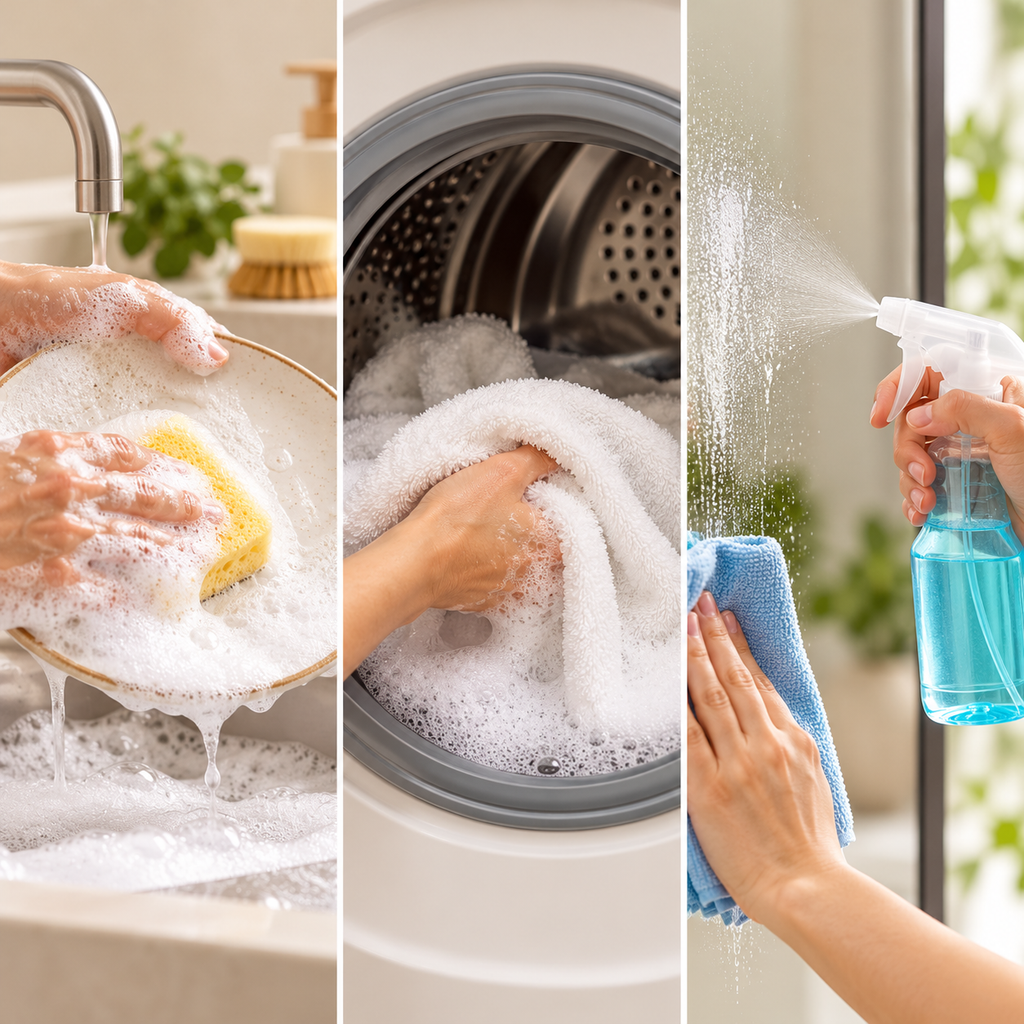
In laundry and dishwashing applications, this can include:
Grease
Oil
Fatty matter
Food deposits
Protein-type deposits
Stains
But the way a finished cleaning product is designed still depends heavily on the surface being cleaned.
A plate is usually physically scrubbed.
Clothes inside a washing machine are primarily agitated.
A glass window needs easy spraying and quick wiping.
A floor cleaner does not need to behave like hand wash.
This is why the same bioenzyme concept can appear in very different finished products.
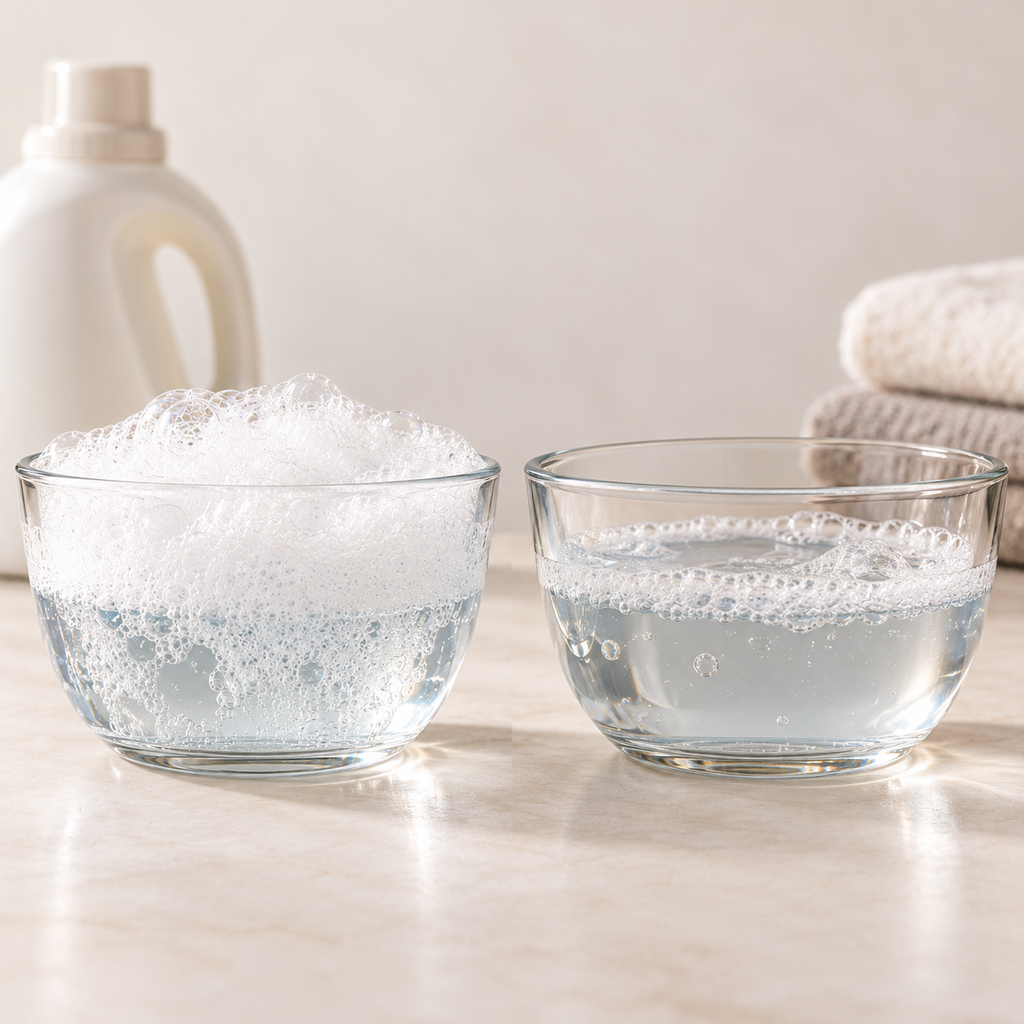
Does More Foam Mean Better Cleaning?
ot necessarily.
Foam is an important part of how consumers experience certain cleaning products, but every cleaner does not need the same amount of lather.
For example:
Hand wash is expected to lather
Dishwashing liquid generally needs visible foam
Laundry detergent needs useful cleansing without uncontrolled foam
Glass cleaner does not need heavy lather
Floor cleaners may need very little foam
Bioenzyme itself is not primarily used just to create bubbles.
Other ingredients in a complete product contribute to the familiar foaming behaviour.
Understand Foam in Cleaning Products
Why Does Hard Water Matter in Detergents?
Water quality is easy to overlook.
The same detergent can behave differently depending on the mineral content of the water in which it is being used.
Hard water can affect lather and cleansing behaviour.
This is why detergent systems may include ingredients specifically intended to support performance under hard-water conditions.
Water quality also matters when manufacturing finished water-based cleaning products.
For commercial products where consistent stability is important, I prefer distilled or demineralized water.
The water used for bioenzyme fermentation itself does not have exactly the same requirement.
Learn About Hard Water and Detergent
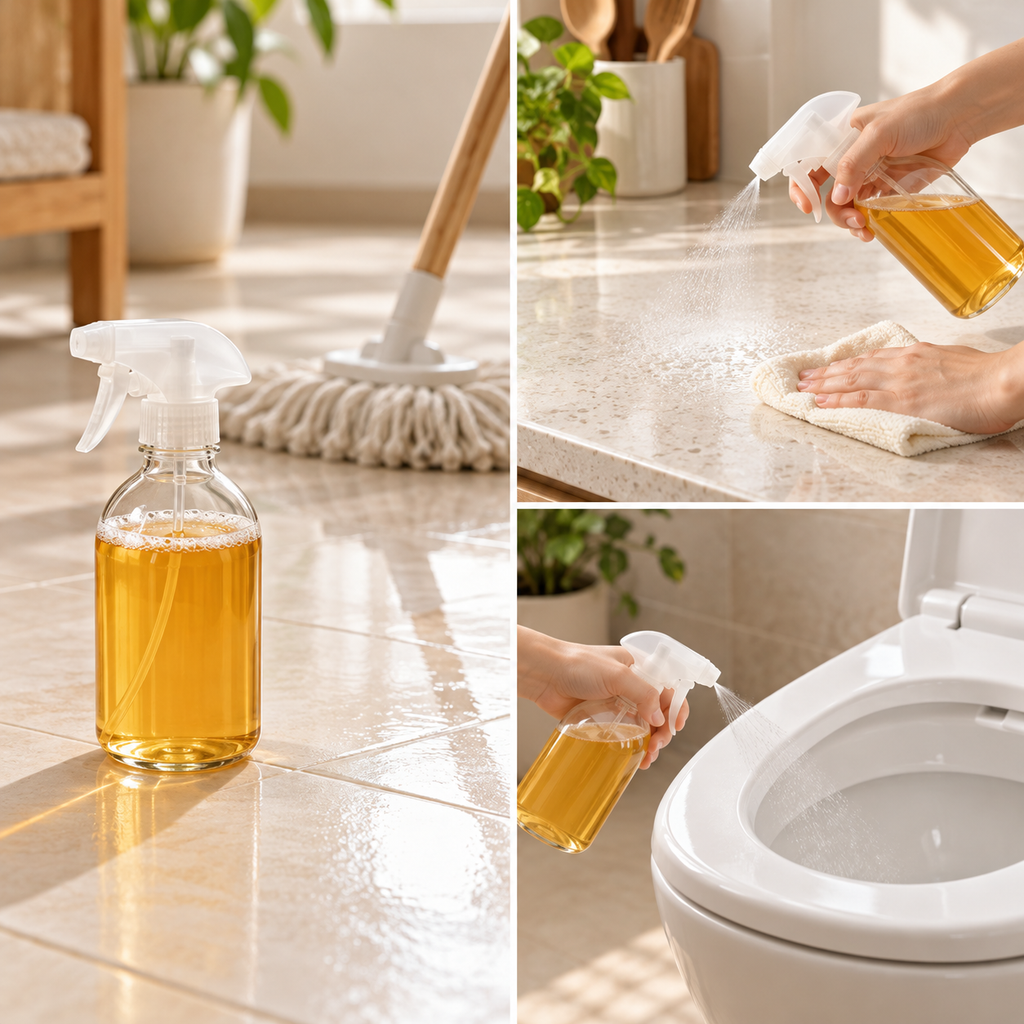
Can Bioenzyme Be Used Directly for Household Cleaning?
enzyme does not always have to be incorporated into a conventional detergent-style product.
It was also discussed for household-cleaning applications including:
Floors
Toilet pans
Bathroom tiles
Kitchen surfaces
Sinks
Stained ceramic surfaces
Greasy areas
The way bioenzyme is used depends on what is being cleaned.
A finished retail surface cleaner may also contain additional functional ingredients to improve convenience, sprayability, consistency or overall user experience.
Explore Household Cleaning Uses
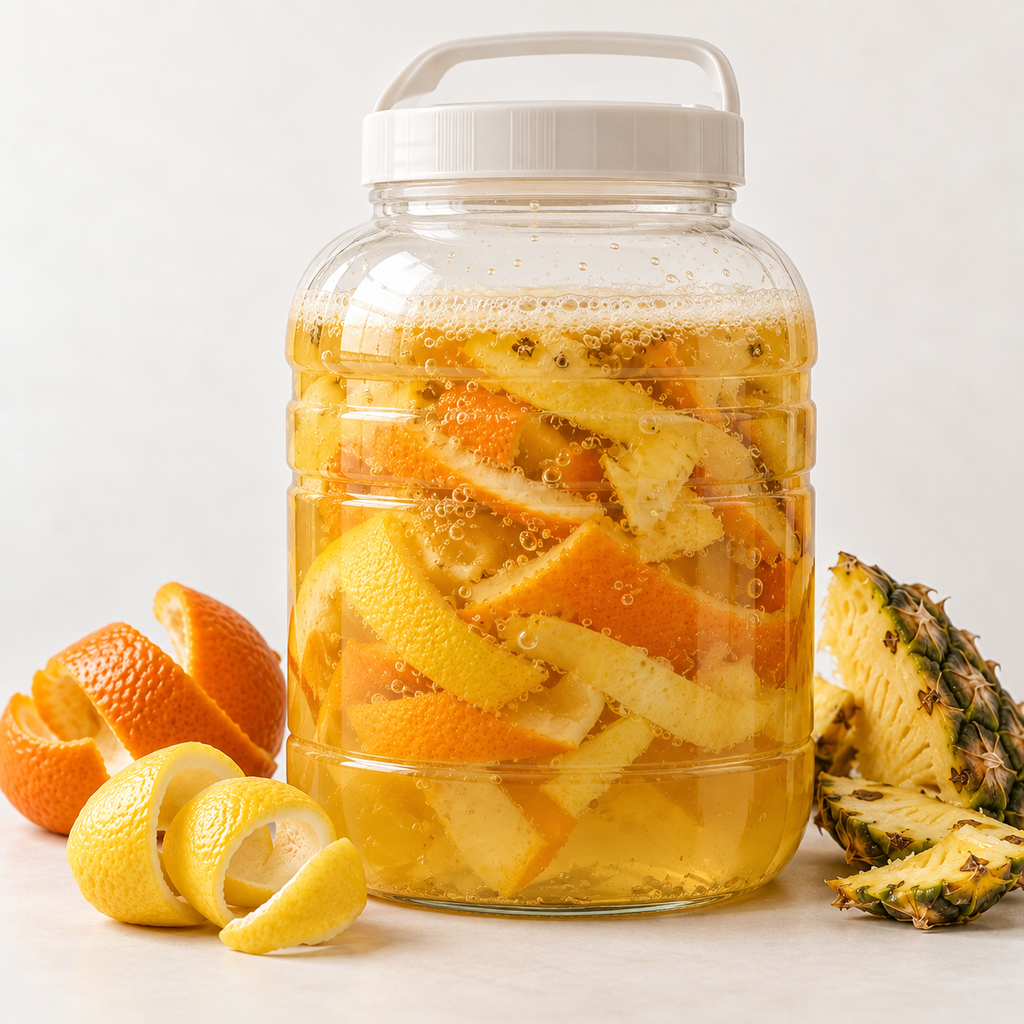
Why Does Bioenzyme Fermentation Need the Right Container?
Bioenzyme fermentation produces gas.
This means the fermentation container cannot be treated like an ordinary storage bottle.
I prefer plastic for active concentrated bioenzyme fermentation rather than glass or metal.
Plastic has some flexibility when pressure develops.
Glass does not expand in the same way and can crack.
The acidic character of the fermented liquid is also one reason I avoid metal during active fermentation.
Container choice and pressure management are therefore important considerations.
Learn About Fermentation Containers
What Should Normal Bioenzyme Fermentation Look Like?
A fermenting bioenzyme changes over time.
During more active fermentation, you may notice fizz and gas.
Citrus preparations often appear more active than rose, neem or reetha preparations.
That means two successful bioenzyme batches do not necessarily look exactly alike while fermenting.
The final colour can also vary.
A citrus-only preparation may remain comparatively light, while a mixed batch containing several different peels may become darker.
Colour alone should therefore not be treated as the only indicator of how a bioenzyme is progressing.
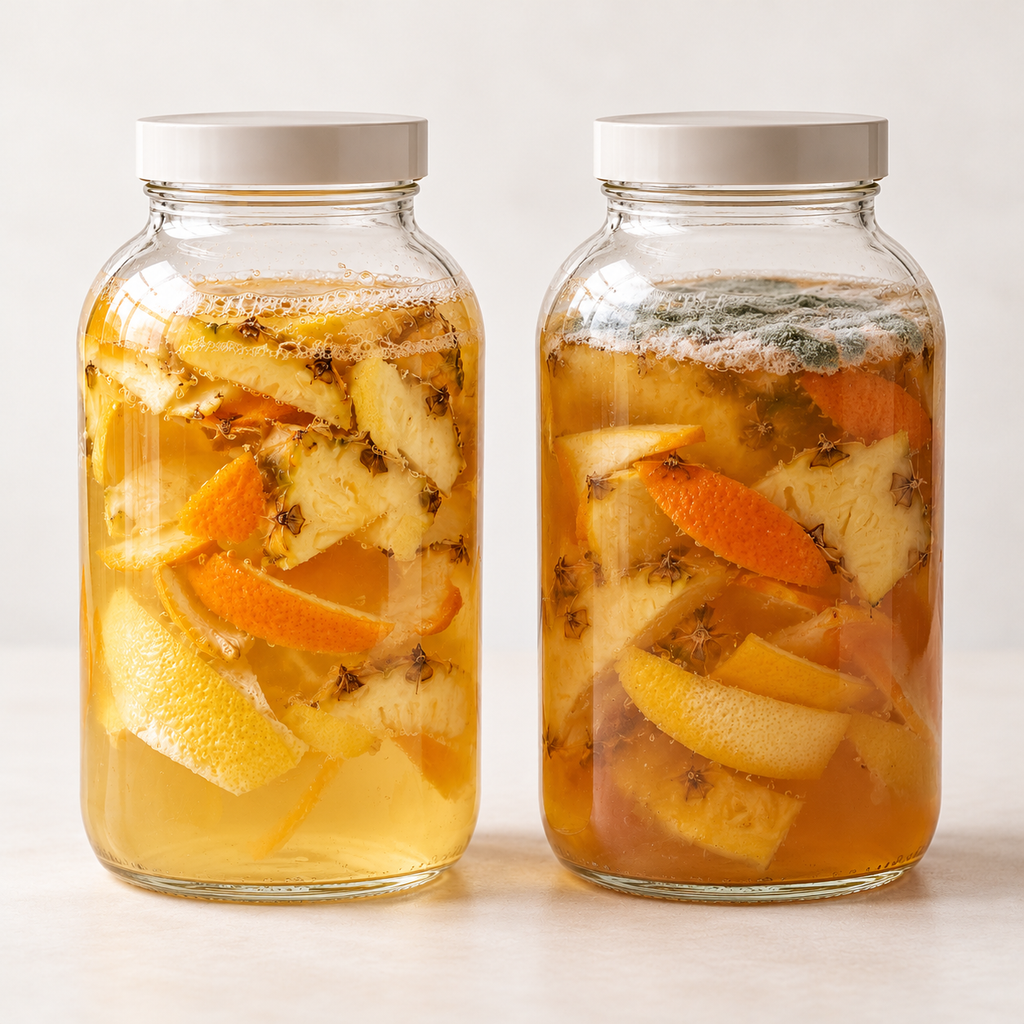
What If Bioenzyme Develops Fungus?
The intended fermentation discussed here involves bacteria and yeast rather than fungal growth.
An unwanted fungal layer may appear as a powdery greenish or greyish layer on the surface and may be accompanied by an unpleasant smell.
A small surface problem noticed early is different from a batch that has developed heavy fungal growth and a strong unpleasant odour.
Observation during fermentation is important.
Bioenzyme Fermentation Troubleshooting
Understanding Bioenzyme as a System
The most useful way to understand bioenzyme is not to think of it as one universal cleaner.
It is a fermented cleaning base that can play different roles depending on the product and the surface.
A fabric is not a plate.
A plate is not your hand.
A glass window does not need the same foam as laundry.
A toilet cleaner does not necessarily need the same consistency as a conventional commercial cleaner.
Once you understand the purpose of the bioenzyme, the surface being cleaned and the roles of the other ingredient categories, bioenzyme-based cleaning becomes much easier to understand.