
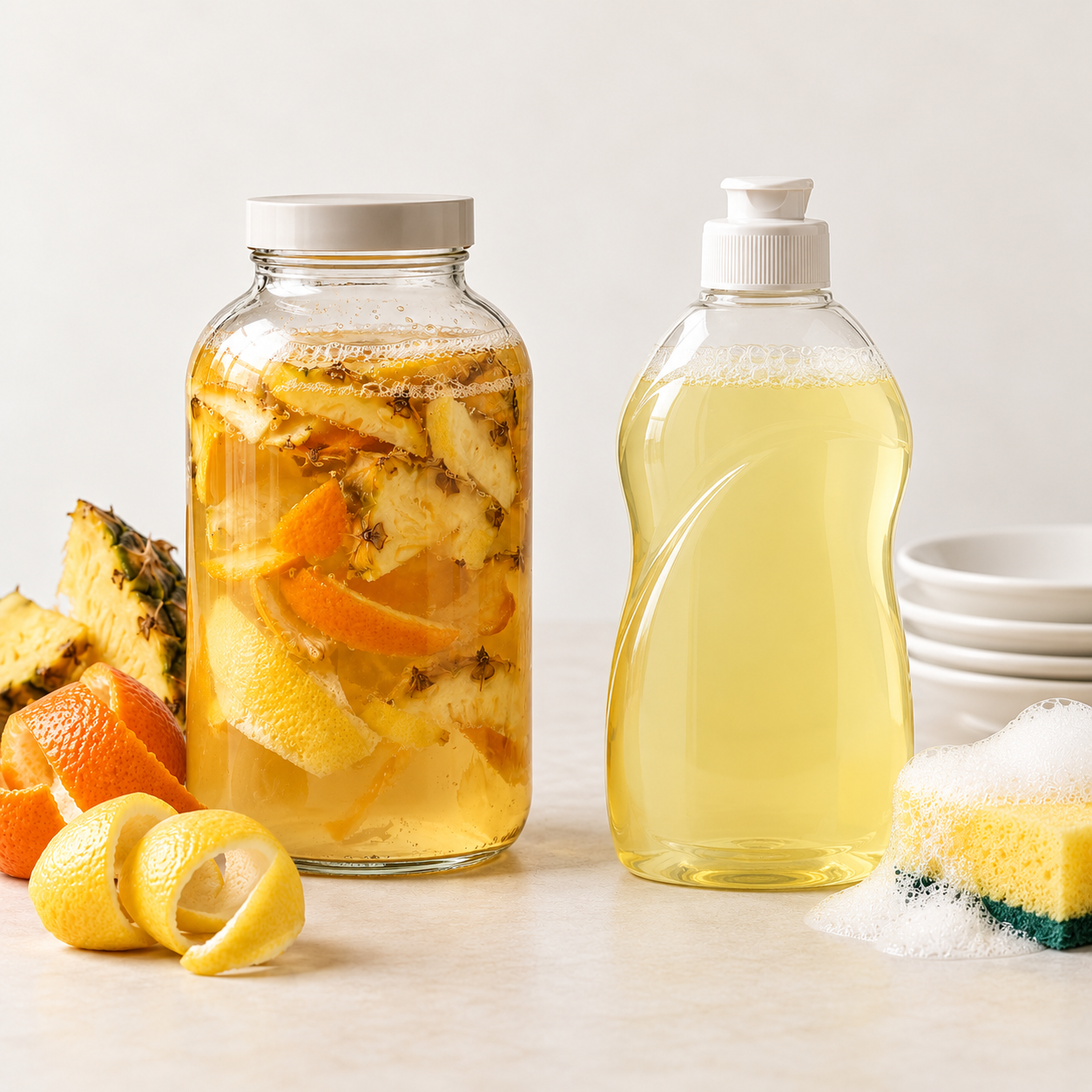
Bioenzyme and detergent are not the same thing.
This is one of the most important concepts to understand when you first start learning about bioenzyme-based cleaning.
What Is Bioenzyme?
Bioenzyme is the fermented component of the cleaning system.
I use it mainly for the role it plays in loosening or breaking down difficult deposits such as grease, oils, food matter and stains.
It can also be used directly for certain household-cleaning applications.
What Is a Finished Detergent?
A detergent is a complete cleaning product.
A bioenzyme-based detergent may contain bioenzyme, but it can also require other ingredient categories to provide the characteristics consumers expect.
For example, a detergent normally needs a cleansing and foaming system.
It may also need ingredients that influence:
- thickness;
- water performance;
- dispersibility;
- fabric appearance;
- mildness;
- stability.
Bioenzyme contributes to the system, but it does not automatically perform every one of those functions.
Why Not Just Use Bioenzyme Alone?
For certain jobs, you can.
Bioenzyme was discussed for direct or diluted use on surfaces such as floors, tiles, toilet pans and stained ceramic areas.
However, think about what you expect when you buy dishwashing liquid.
You expect it to foam.
You expect it to have a certain consistency.
You expect it to spread conveniently on the sponge or utensil.
The same is true with laundry detergent.
Consumers already have an idea of how these products should pour, foam and feel.
Bioenzyme alone may not provide those familiar properties.
Why Do Surfactants Matter?
Surfactants provide much of the conventional washing and lathering action.
Some surfactants are stronger cleansers, while others are deliberately milder.
This allows the finished formulation to be adjusted according to the surface.
A greasy cooking vessel does not need the same cleansing system as your hands.
A shirt does not need exactly the same system as a plate.
Bioenzyme as Part of a Cleaning System
I prefer to think of bioenzyme as a functional cleaning base.
It can support different types of finished products, including:
- laundry detergent;
- dishwashing liquid;
- hand wash;
- glass cleaner;
- floor cleaner;
- kitchen-surface cleaner;
- toilet cleaner.
The final product changes because the cleaning requirement changes.
That is why bioenzyme should not be treated as a universal one-ingredient replacement for every cleaner.