
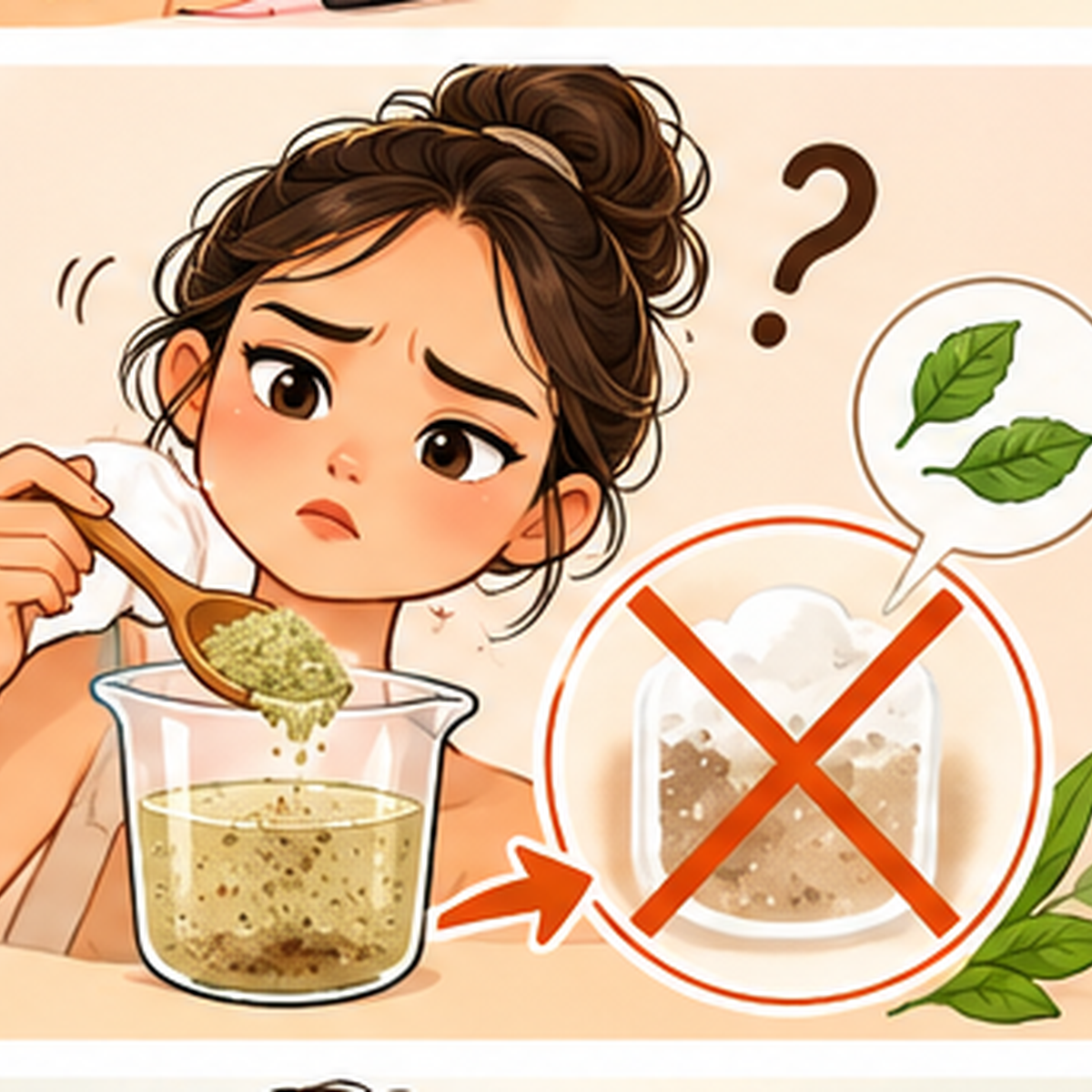
Because many herbal powders and plant fibres do not dissolve in the liquid. They can settle at the bottom, disturb clarity and make the face wash look unstable.
If you want a botanical face wash, it can be tempting to add beetroot powder, strawberry powder, orange peel powder, oats or another plant material directly into the liquid. The problem is that a liquid face wash cannot keep every solid material evenly dispersed.
If the powder does not truly dissolve, gravity eventually wins: the particles settle. For personal experimentation you may tolerate that, but in a finished product the sediment is obvious and unattractive.
Powder and extract are not the same thing
This distinction came up repeatedly in student questions. Using orange peel as the starting material for an extract is different from putting orange peel powder directly into the finished face wash.
The same issue applies to oats. Simply boiling a fibrous material and filtering the water is not automatically enough. The workshop specifically warned that some materials release fibre into the liquid, and that fibre is not wanted in the finished face wash.
What kind of botanical material suits a liquid face wash?
The workshop approach was to use a suitable water-soluble extract, hydrosol or properly prepared fibre-free extract when a botanical is needed in a liquid cleanser. The important formulation principle is solubility and cleanliness of the liquid phase, not simply whether the plant itself sounds beneficial.
This is also why a botanical that works beautifully in a powder cleanser may be unsuitable in the same physical form in a liquid cleanser. Product format determines what kind of ingredient form makes sense.
Why sediment matters beyond appearance
The immediate problem discussed in the workshop was product quality and appearance. A commercial-looking liquid face wash is expected to remain consistent rather than showing a layer of powder at the bottom.
It is therefore not enough to ask, “Is this ingredient good for skin?” You also have to ask, “Is this the right form of the ingredient for this product?”
A useful exception to understand
The workshop did not say that all botanical powders are useless. Quite the opposite: powders and clays are central to the herbal powder cleanser. They work there because the product is intentionally dry and powder-based. The same material becomes a problem only when you expect it to behave like a dissolved ingredient in a clear or uniform liquid.
The practical takeaway
Choose the ingredient form to match the cleanser format. In a liquid face wash, use botanical materials in a form that belongs in the liquid. Save visible herbs, clays and powders for products that are designed to be powders rather than trying to force them into a liquid system.
Related Guides
Facial Cleansers Explained: Types, Ingredients, Usage and Common Questions
Explore the different cleanser formats and understand the roles of powders, extracts, surfactants, oils and other ingredient categories.
Read the guide
Do Herbal Powder Cleansers Need to Foam to Work?
Learn why herbs and clays can work naturally in a cleanser designed specifically as a powder.
Read the guide
Why Does a Face Wash Become Thinner When You Add Certain Extracts?
Moving from a powder to an extract solves one problem, but an extract can still affect the consistency and compatibility of a face wash.
Read the guide
Explore Facial Cleansers
Browse all our educational guides and articles on facial cleansing.
Visit the Facial Cleansers Learning Hub