
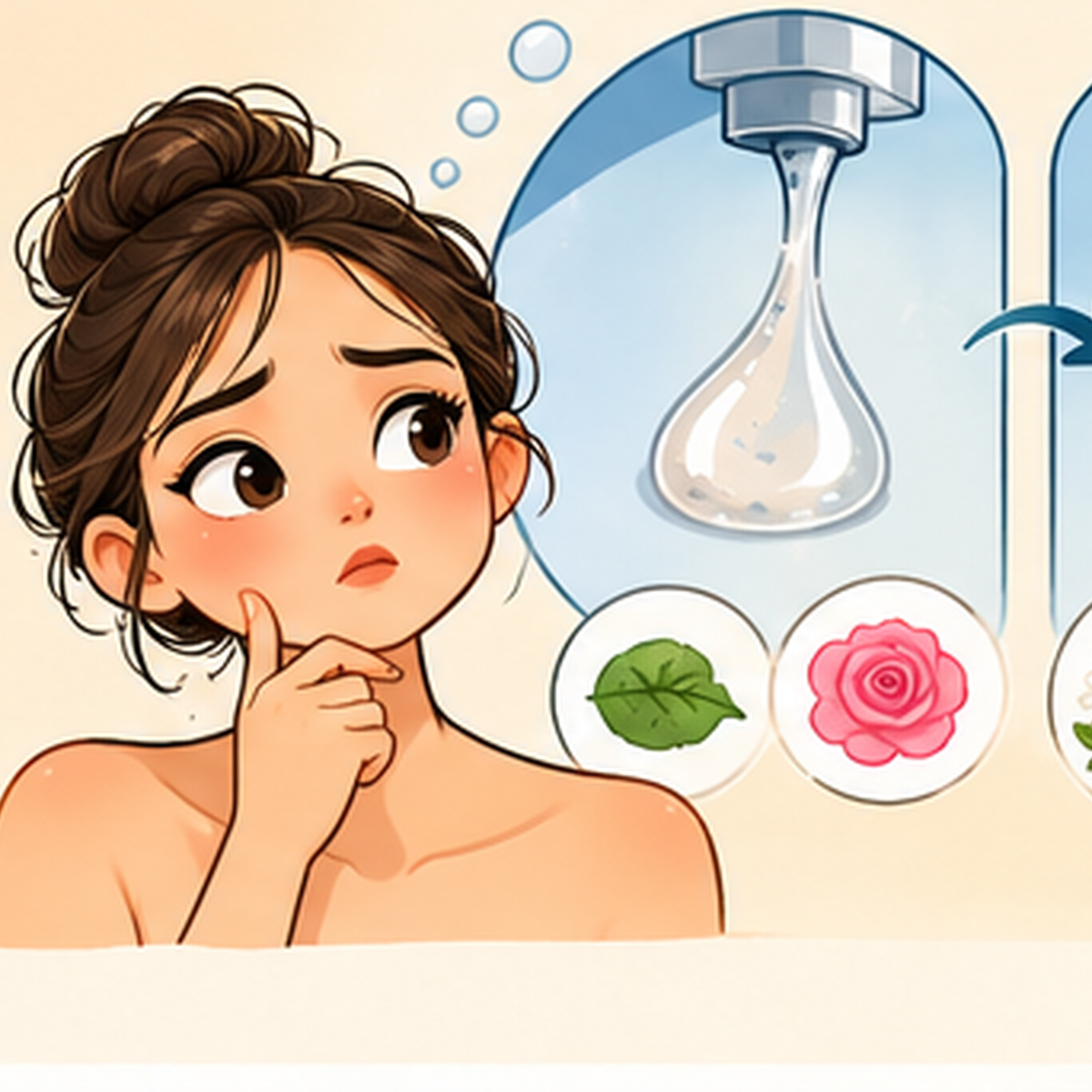
A face wash can become thinner when an acidic extract or active changes the environment in which its thickening and surfactant system is working. The workshop used a vitamin-C-oriented face wash as the practical example.
A student in the workshop had a recurring problem: a vitamin-C-oriented face wash became much thinner than expected. The making process itself was not the main issue; the consistency changed after the acidic material was introduced.
The important lesson is broader than that one product. A face wash is a system of ingredients that have to remain compatible. You cannot assume that adding one attractive ingredient will leave the texture unchanged.
Why an extract can change the result
The workshop connected the thinning to acidity. An acidic addition can change the way the face wash holds its consistency. That is why two versions made with apparently similar botanical materials may not behave exactly the same.
Botanical extracts can also vary. The workshop used the example that different varieties of the same plant need not have identical colour or pH. So a homemade extract and a standardized ready-made extract may produce different behaviour in the same cleanser.
Why ‘just add more thickener’ is not a complete solution
When the student asked about correcting the thin consistency, the discussion made another useful point: a thickening material cannot simply be increased without limit. Beyond a point it may not dissolve properly, and some thickeners can introduce a slimy feel that is not especially pleasant.
That means troubleshooting should start with the cause of the thinning rather than treating thickness as an isolated problem.
Formulation is not the same as cooking
One of the clearest analogies in the workshop came during a question about copying the texture of a commercial cleanser. Cosmetic formulation was contrasted with cooking: you cannot assume that adding a little of one ingredient will predictably change only one property, the way adding salt makes food saltier.
Surfactants and supporting ingredients have to be compatible. Changing one part of the system can affect clarity, thickness and overall behaviour. That is why copying an ingredient list or adding an active to an existing face wash does not automatically reproduce the result you have in mind.
What is the practical lesson for botanical face washes?
If consistency matters, the form and quality of the extract matter too. The workshop suggested that a suitable ready-made extract or a properly prepared hydrosol can avoid some of the variability that comes from a homemade acidic extract.
The public lesson is not a recipe for correcting viscosity. It is the principle behind the problem: acidity and ingredient compatibility can change texture, so a new botanical addition should be treated as a formulation change, not as a decorative extra.
The practical takeaway
When a face wash suddenly becomes thin after you add an extract, do not assume the cleanser simply needs more thickener. First recognize that the new ingredient may have changed the system itself. In cleanser formulation, texture is connected to ingredient compatibility.
Related Guides
Facial Cleansers Explained: Types, Ingredients, Usage and Common Questions
Understand the roles of surfactants, extracts, oils, humectants, thickeners and other ingredient categories in different facial cleansers.
Read the guide
Why Shouldn’t You Add Herbal Powders Directly to a Liquid Face Wash?
Learn why the physical form of a botanical ingredient matters when it is being used in a liquid cleanser.
Read the guide
Do Herbal Powder Cleansers Need to Foam to Work?
Explore a cleanser format where herbs and clays are intentionally used as powders rather than incorporated into a liquid face wash.
Read the guide
Explore Facial Cleansers
Browse all our educational guides and articles on facial cleansing.
Visit the Facial Cleansers Learning Hub