
Tinted Strobe Cream vs Regular Strobe Cream: What Is the Difference?
Comparison of tinted strobe cream with a beige skin-tone finish and regular pearlescent strobe cream, illustrating differences in coverage and luminous glow.
Comparison of tinted strobe cream with a beige skin-tone finish and regular pearlescent strobe cream, illustrating differences in coverage and luminous glow.
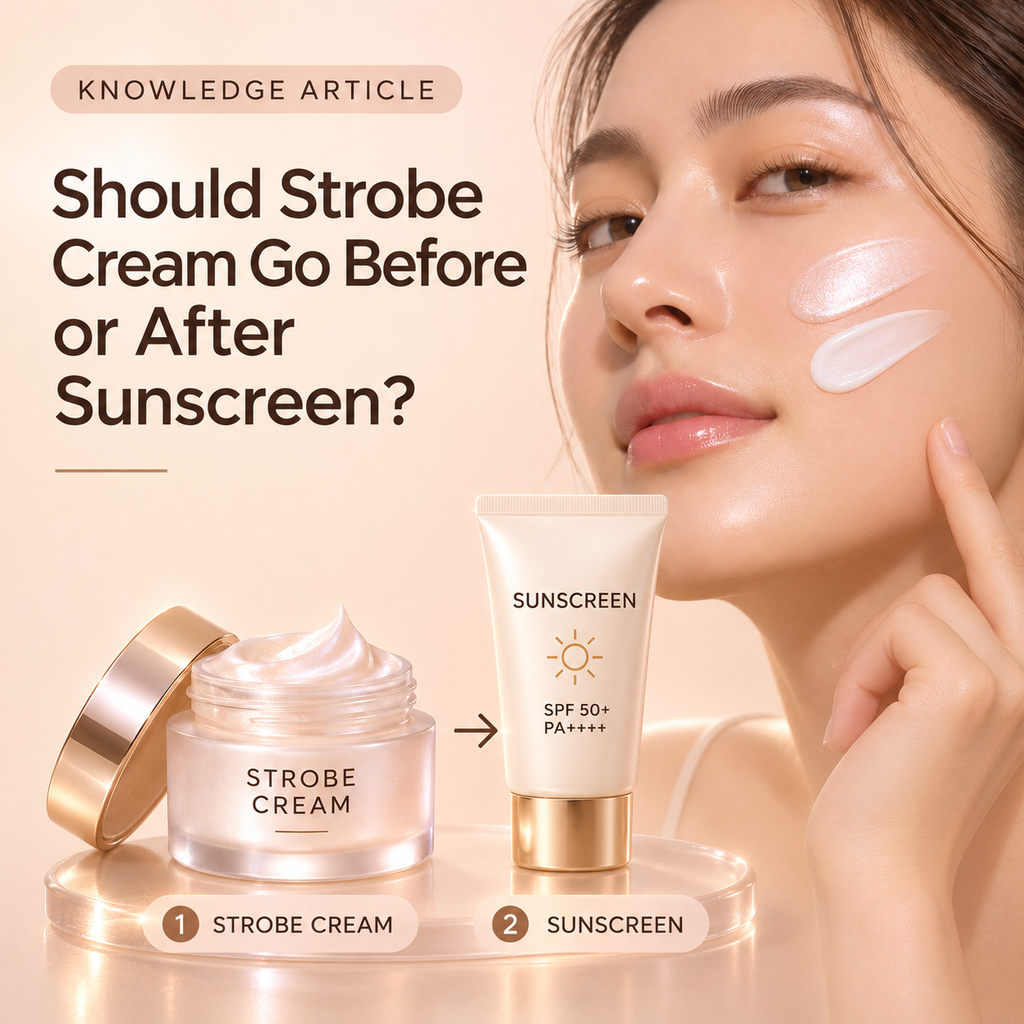
For a visible luminous finish, strobe cream is generally preferred after sunscreen as the final cosmetic layer. Learn why sunscreen texture can affect the reflective glow, how mineral sunscreens may create a mattifying effect, and why strobe cream should not be treated as a replacement for tested sun protection.
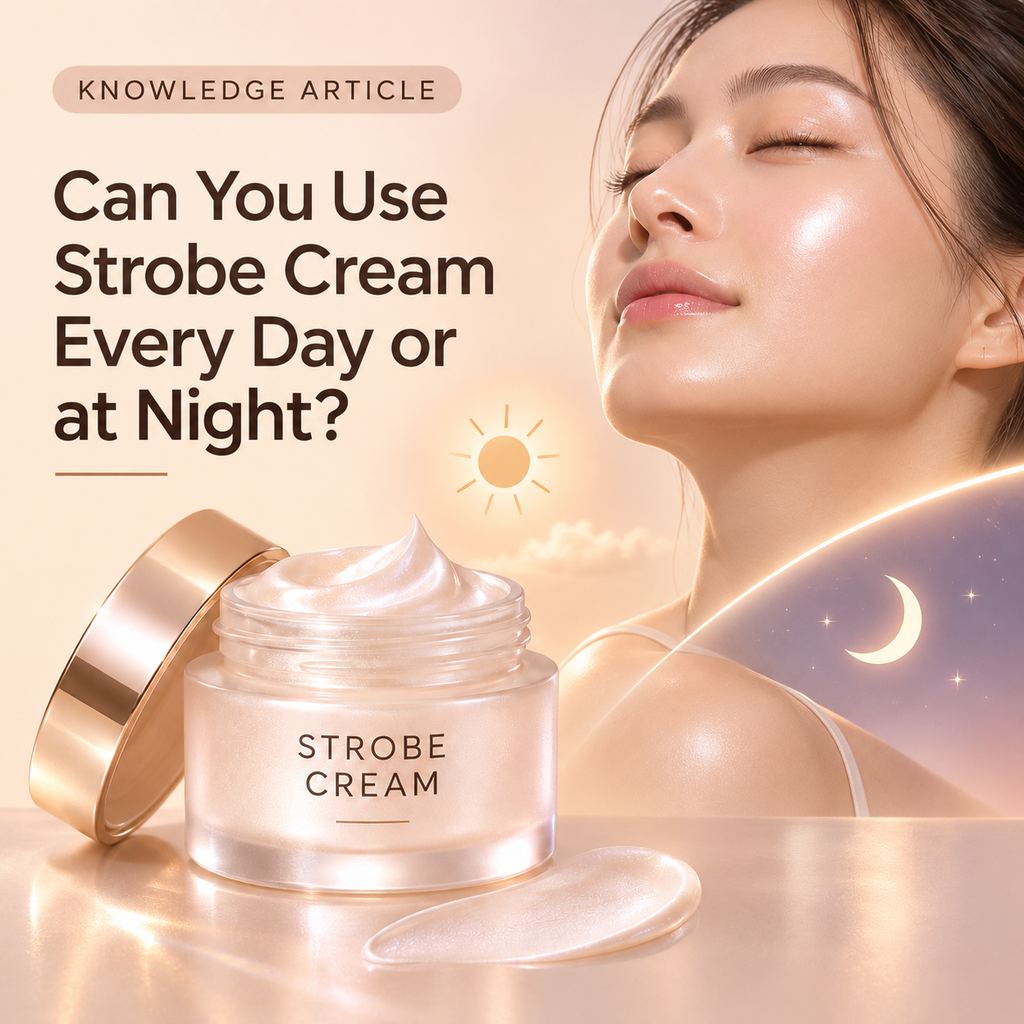
Strobe cream can be used during the day or evening to create a luminous, light-reflecting finish. However, its mica-based glow serves little purpose when sleeping. Learn when to use strobe cream, how lighting influences its appearance, and why a non-reflective moisturising product may be preferable at bedtime.
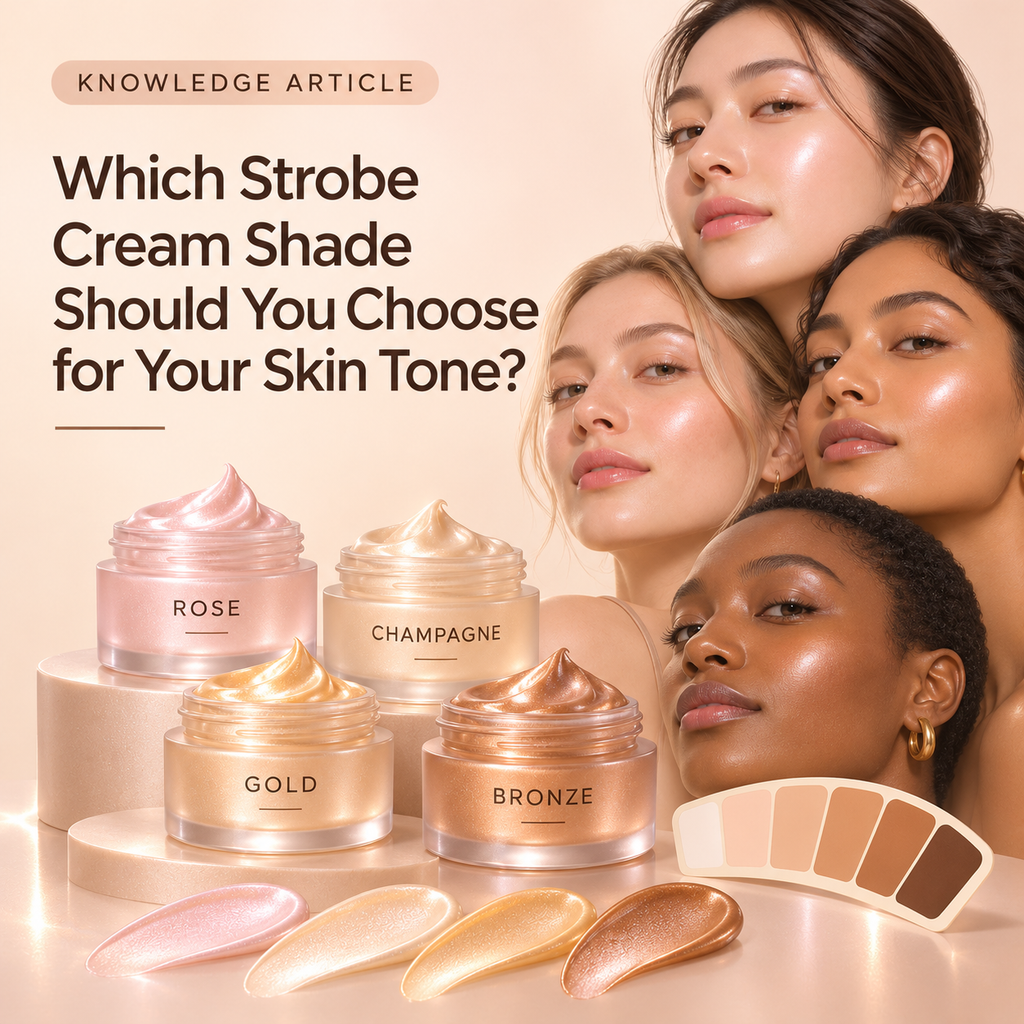
Choosing the right strobe cream shade can make your glow look more natural. Explore rose and champagne shades for lighter complexions, gold for medium tones and bronze for deeper skin tones, and understand how mica colours affect the final appearance.
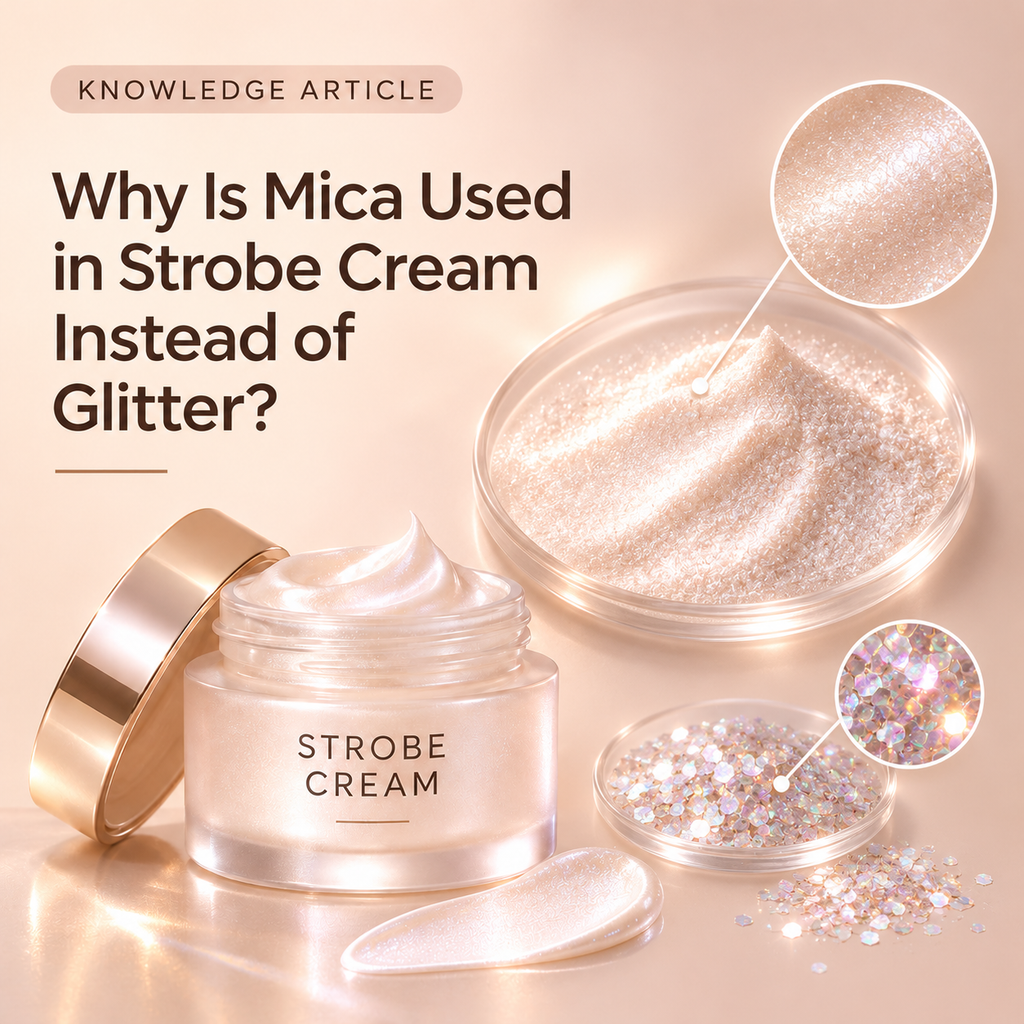
Mica is used in strobe creams because its light-reflecting particles create a smooth, luminous finish rather than an obvious glittery appearance. Learn how mica produces the glass-skin effect and why lighting influences the visible glow.
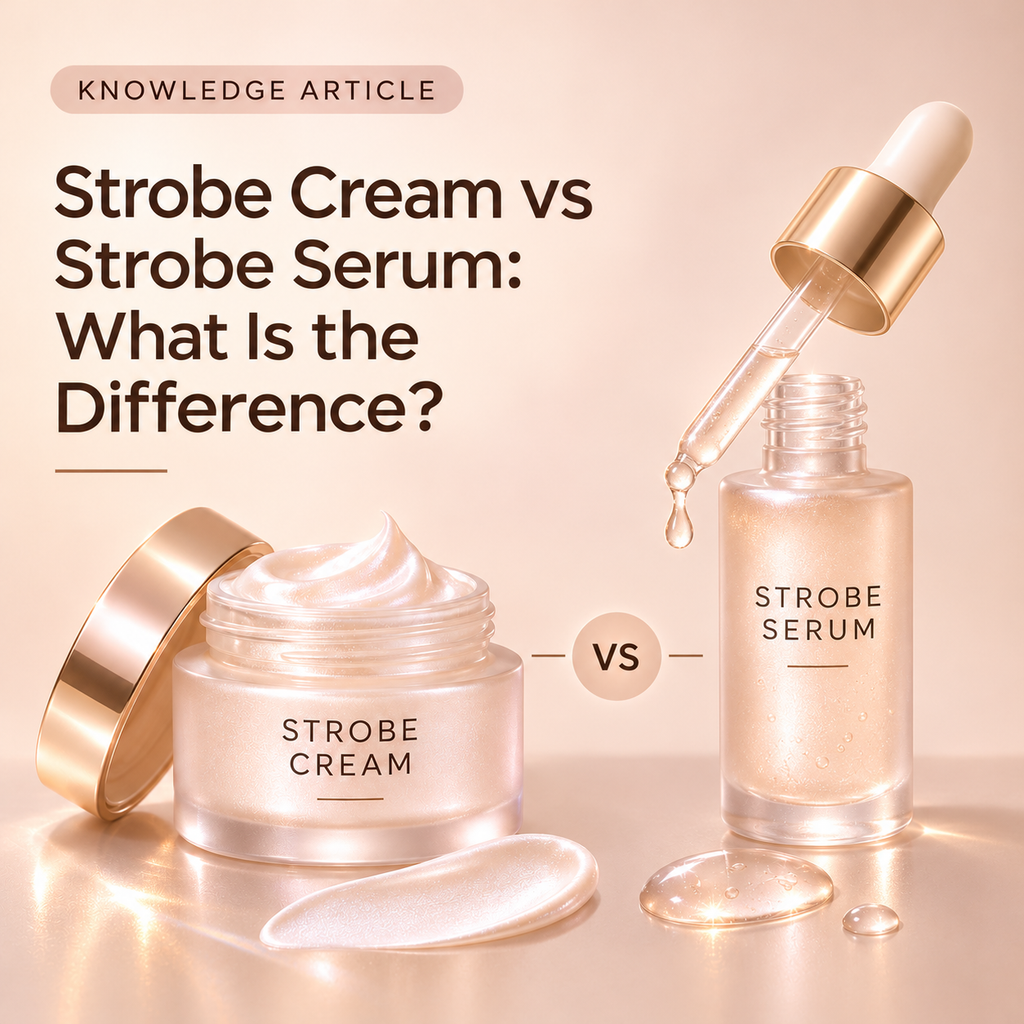
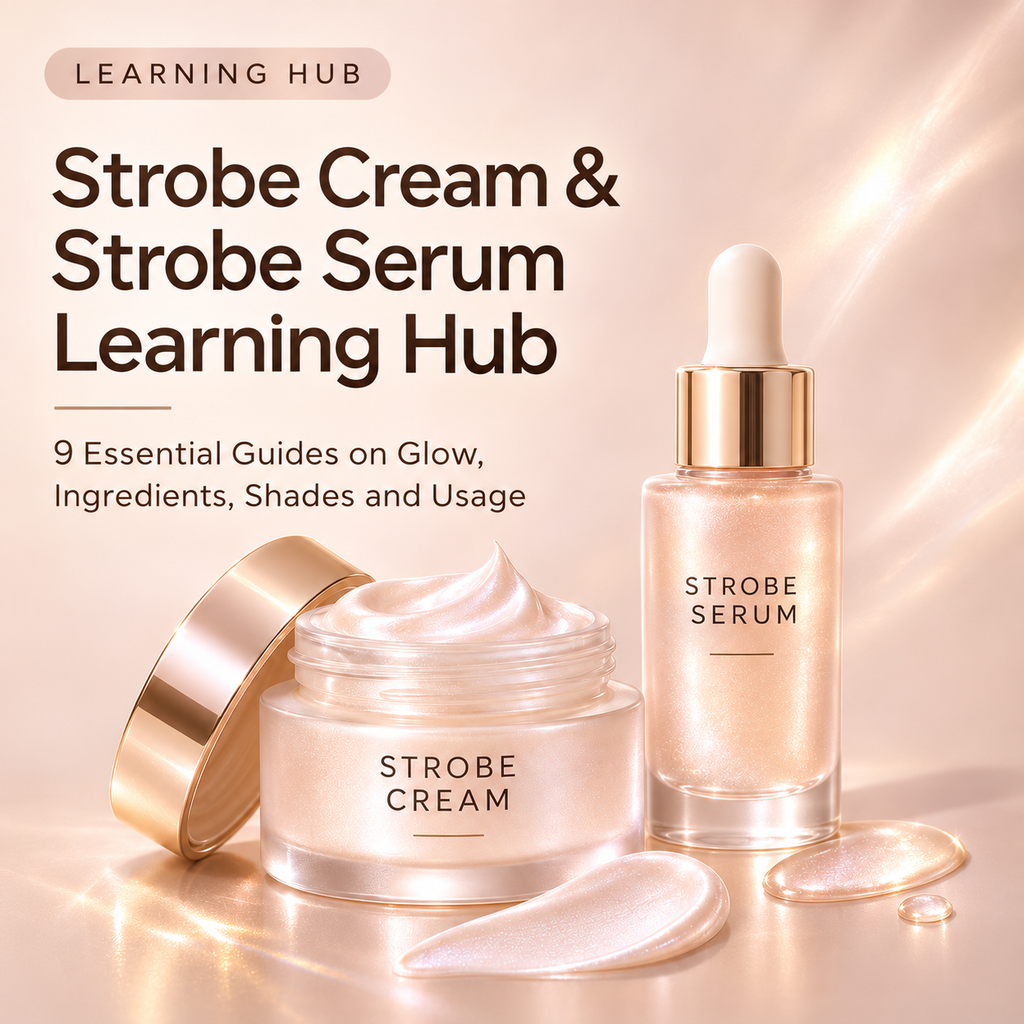
Comparison of a pearlescent strobe cream in a cosmetic jar and a luminous strobe serum in a dropper bottle, highlighting their different textures and glowing finishes.
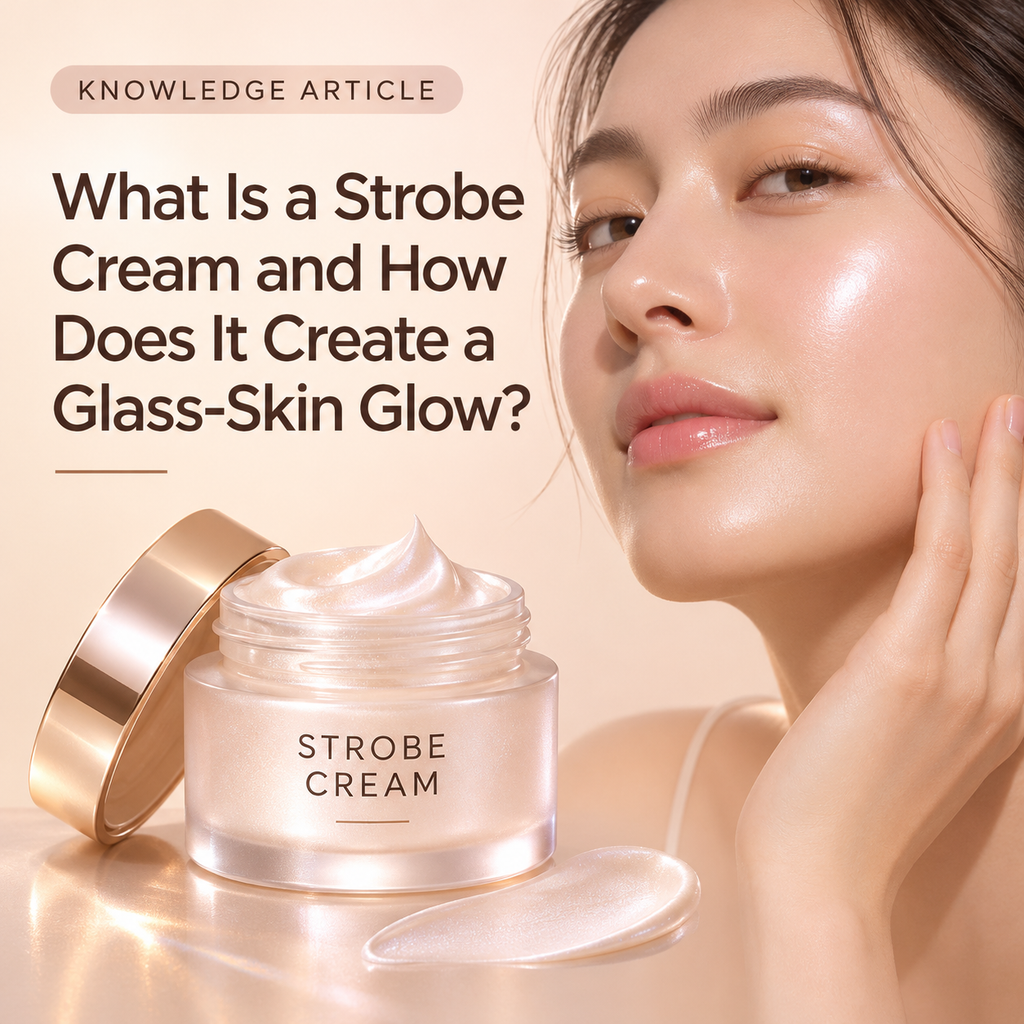
A strobe cream is a skincare-meets-makeup product designed to give the skin an instant luminous glow. Learn how it works, why mica creates the glass-skin effect, and how strobe cream differs from ordinary moisturisers and foundations.