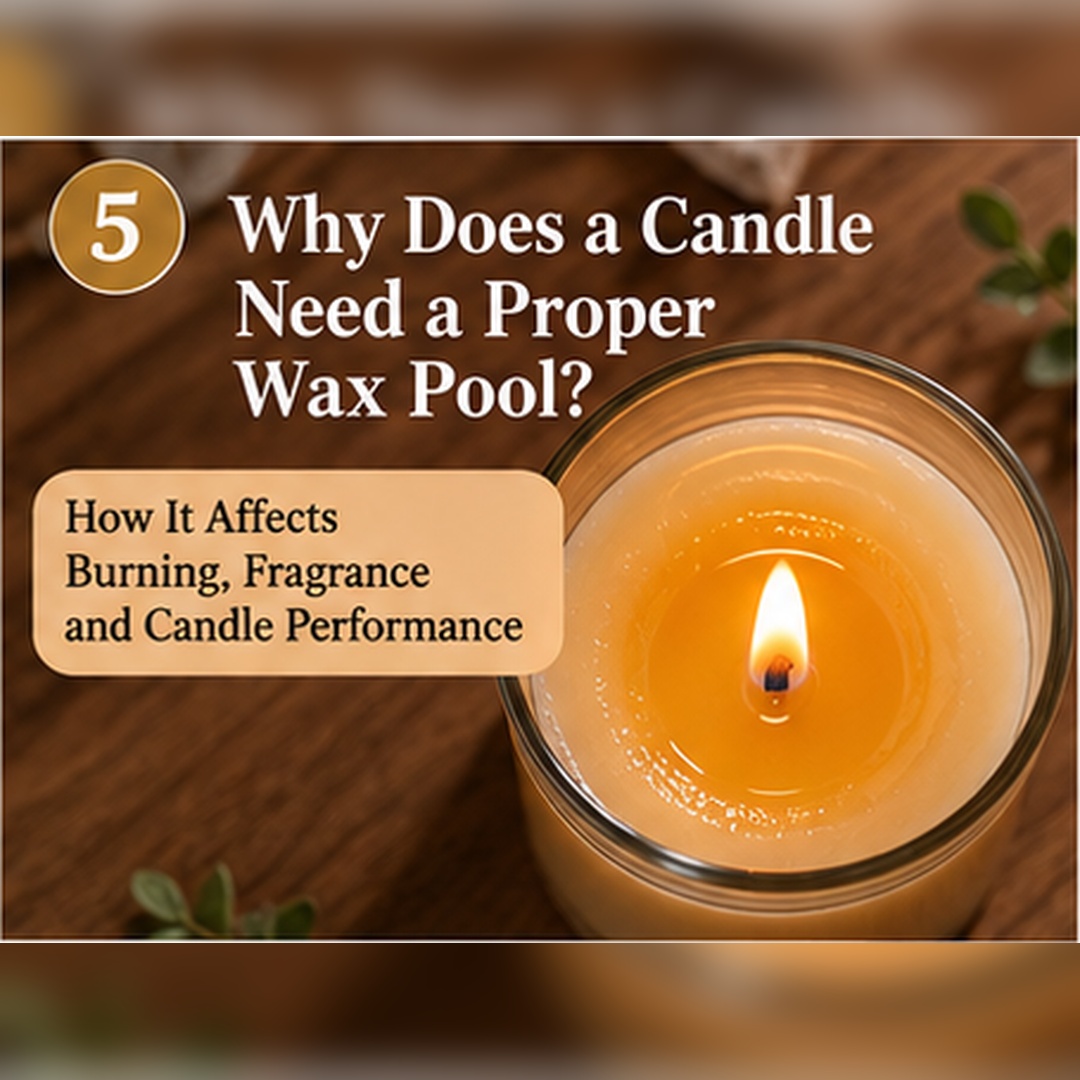
A wax pool is the layer of liquid wax that develops around the wick while a candle is burning.
It matters because the size and quality of that melted area affect both the way the candle burns and, in a scented candle, how effectively the fragrance spreads.
The Wax Has to Melt Before You Judge the Aroma
When you first light a candle, most of the wax is still solid.
If you stand some distance away immediately and expect a strong fragrance, you may be disappointed.
The flame first needs to melt some of the wax surrounding the wick.
Once a liquid layer develops, the scented candle begins giving the aroma associated with its hot throw.
This is why I would not judge fragrance performance within the first moments of lighting the candle.
Candle Width Changes Wax-Pool Formation
A small or narrow candle can develop a useful melted area faster.
A wide candle has a much larger surface, so the wax pool naturally takes longer to spread.
This distinction becomes important when customers compare candles.
A person may light a broad candle, wait briefly and conclude that it has poor fragrance, while the candle may simply need more time for the surface wax to melt.
An Undersized Wax Pool Can Signal a Wick Problem
Suppose a broad candle burns with one small wick.
A tiny pool develops in the middle, but the rest of the surface stays hard.
That small pool may not give the desired fragrance throw.
If the same burning pattern continues, the candle can also become hollow through the centre.
So the wax pool acts almost like a visual clue to how well the wick and candle size are working together.
More Heat Is Not Automatically Better
The answer is not to create the biggest possible wax pool as quickly as possible.
An oversized flame can produce too much heat and melt excessive wax.
A good candle therefore needs balance.
The flame, wick and candle size need to create the amount of melted wax appropriate for the candle rather than either a tiny central hole or an unnecessarily aggressive burn.
Why the Wax Pool Matters to the User
For the buyer, understanding wax-pool formation helps set realistic expectations.
A scented candle should be allowed enough time to begin developing its melted surface before its hot throw is judged.
For the maker, the wax pool gives valuable information during testing.
Watch what the candle actually does.
If the surface melts appropriately and the fragrance begins spreading, the candle is behaving very differently from one that simply drills a narrow hole through its centre.
That is why the wax pool is one of the most useful things to observe when assessing candle performance.