
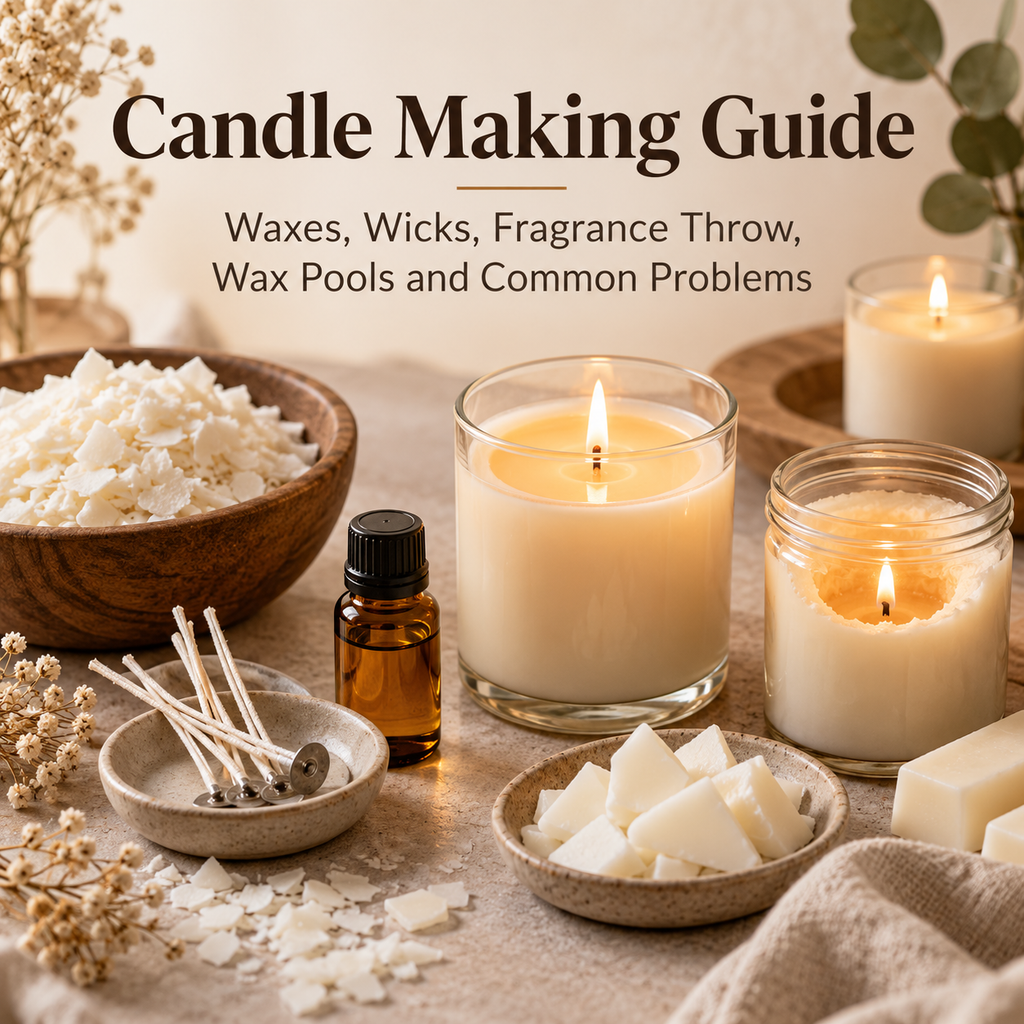
Candle Making Guide: Waxes, Wicks, Fragrance Throw, Wax Pools and Common Problems
Learn the fundamentals of candle making, including wax types, wick selection, fragrance throw, wax-pool formation, tunnelling and common burning problems.
Learn the fundamentals of candle making, including wax types, wick selection, fragrance throw, wax-pool formation, tunnelling and common burning problems.
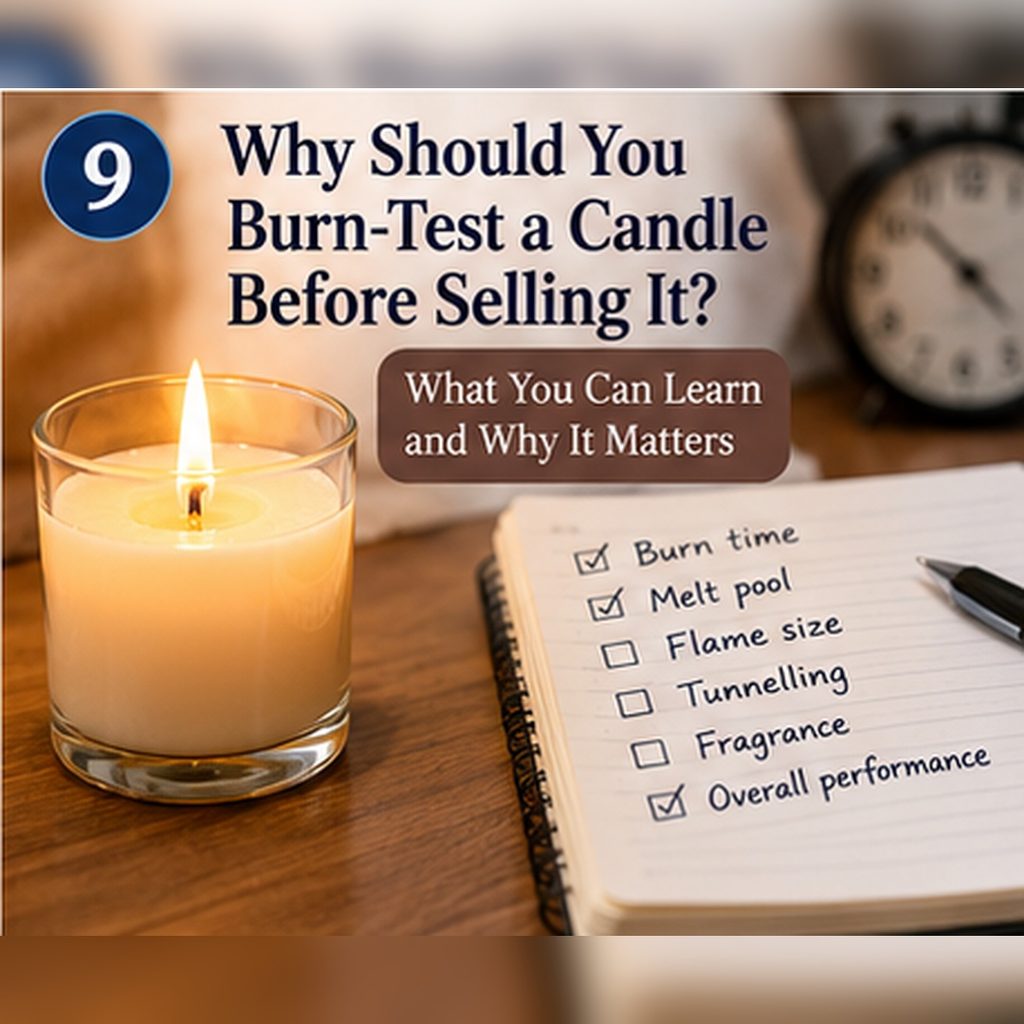
A candle should be burn-tested before you give customers confident information about its burn time and performance. You cannot determine exact burn time reliably from wax weight alone because candle
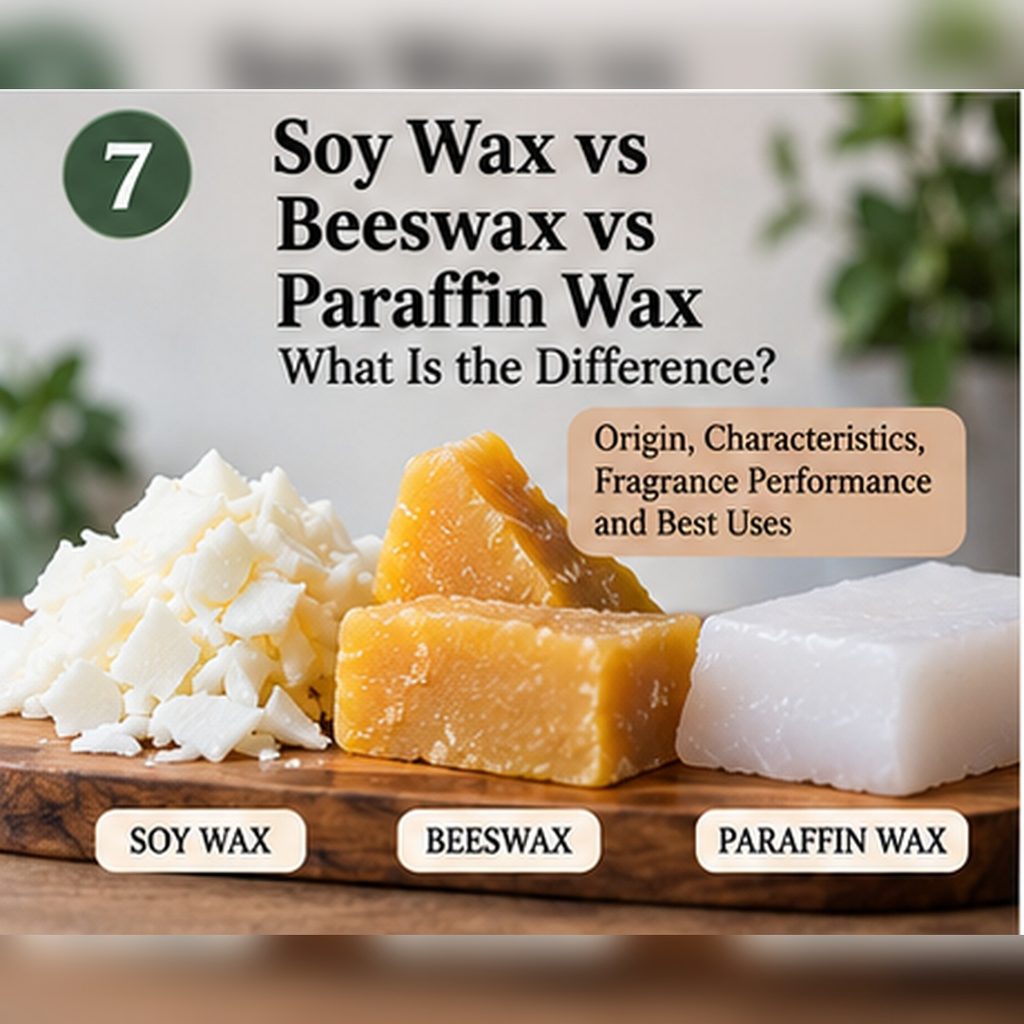
Soy wax, beeswax and paraffin wax behave differently in candles. Learn how they compare in origin, firmness, fragrance throw and candle applications.
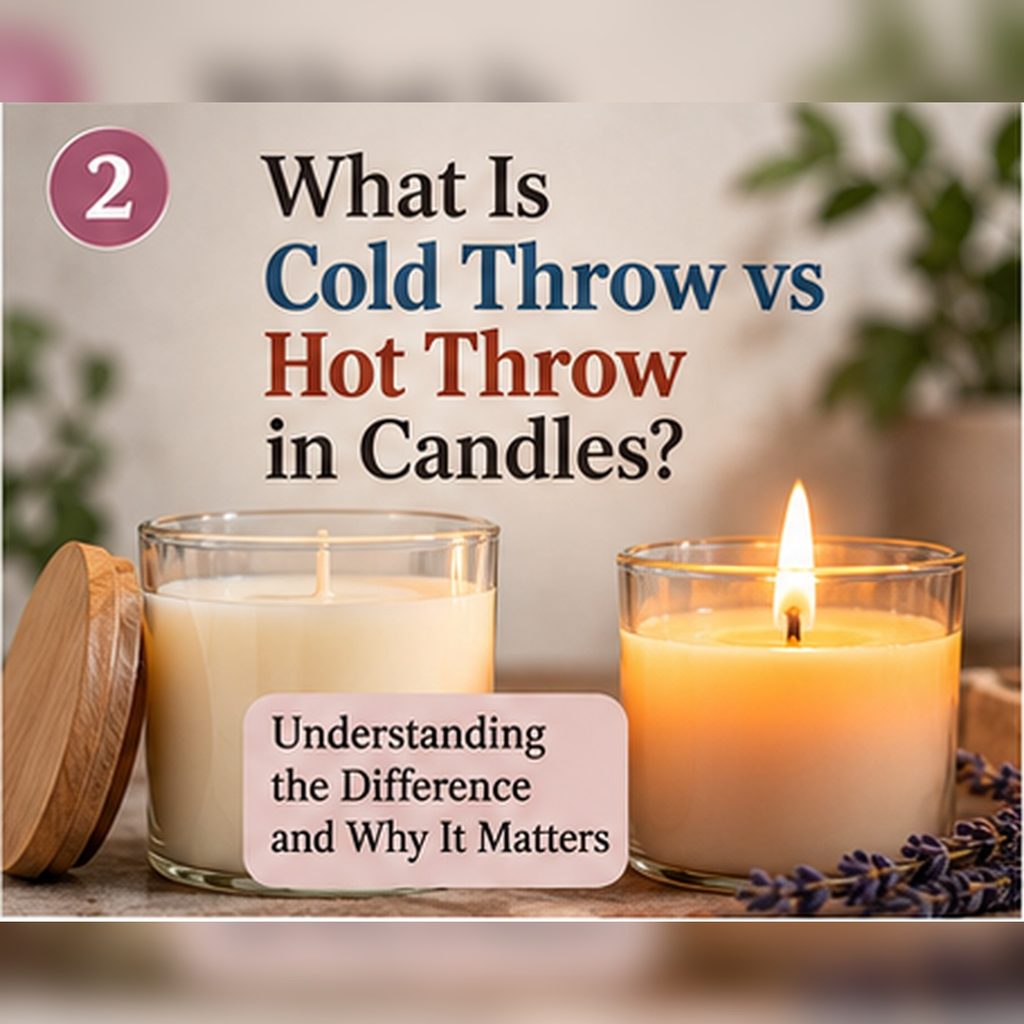
Cold throw is the fragrance you smell from an unlit candle, while hot throw is the aroma released while the candle burns. Learn why the difference matters when judging candle fragrance.
Why can some perfumes be noticed across a room while others stay close to the wearer? Learn what fragrance throw means and how alcohol, water, oil and solid perfume bases affect how fragrance travels.
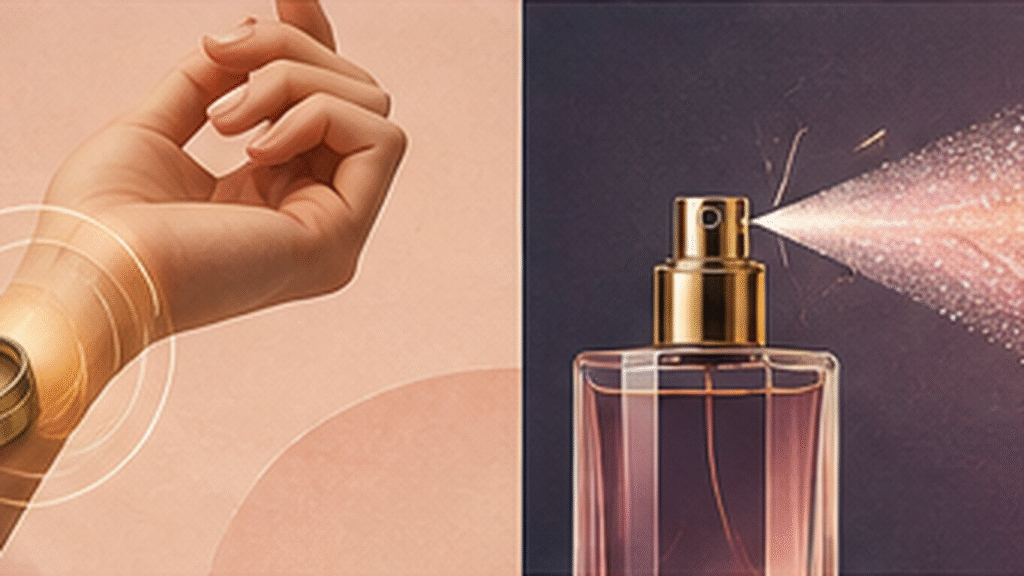
Solid perfume stays close to the body, while alcohol-based spray perfume projects fragrance farther into the surrounding air. Learn why the two formats behave differently and which experience each is designed to provide.