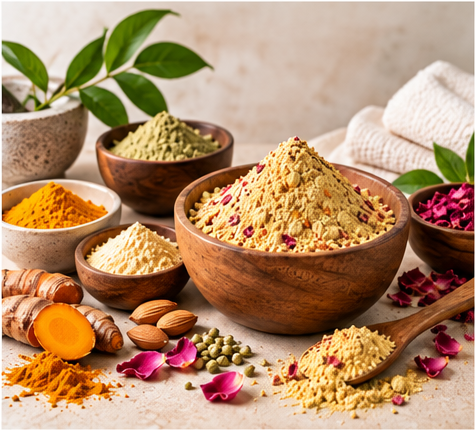
Ubtan

Learn about Ubtan, its ingredients, benefits, uses and formulation principles. Explore how different ingredients affect oily, dry and mature skin, and understand the practical considerations behind creating and using Ubtan products.

START HERE

A complete introduction to Ubtan—from traditional uses and common ingredients to skin types, application, powder versus paste formulations and practical product considerations.

Explore Ubtan in Detail

Have a specific question? Explore our focused guides to Ubtan ingredients, skin types, usage and formulation.

What Is Ubtan and How Is It Used

Understand what Ubtan is, how it differs from an ordinary face wash and how it can be used for the face and body.

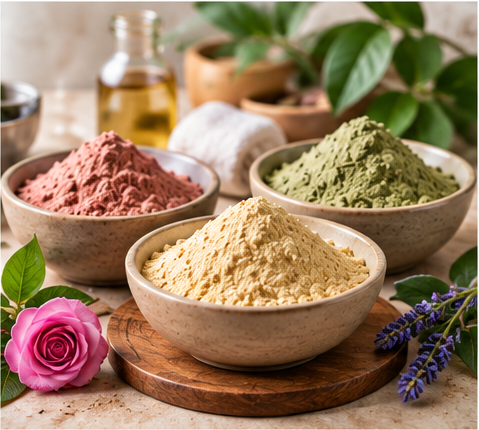
Ubtan for oily dry skin

Choosing an Ubtan for Oily, Dry or Mature Skin

Learn how ingredient selection changes according to skin type and what you want the Ubtan to achieve.

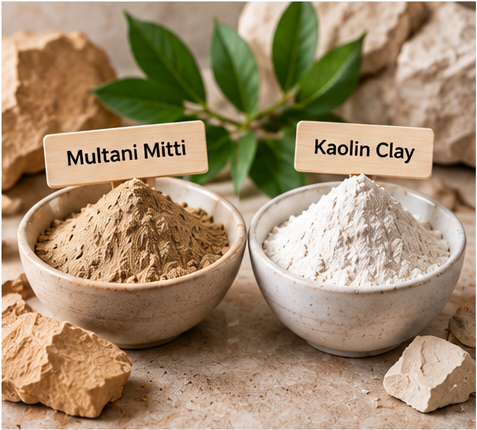
Multani Mitti vs Kaolin Clay

Multani Mitti vs Kaolin Clay: What's the Difference in Ubtan?

Compare two commonly used clays and understand their differences in oil absorption and skin feel.

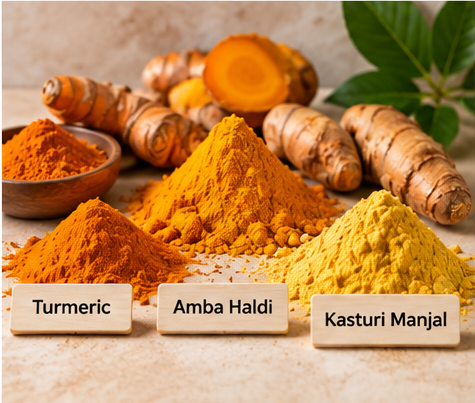
turmeric in Ubtan

Turmeric, Amba Haldi and Kasturi Manjal in Ubtan: What's the Difference?

Understand how these traditional ingredients differ and the practical considerations when using them in Ubtan.

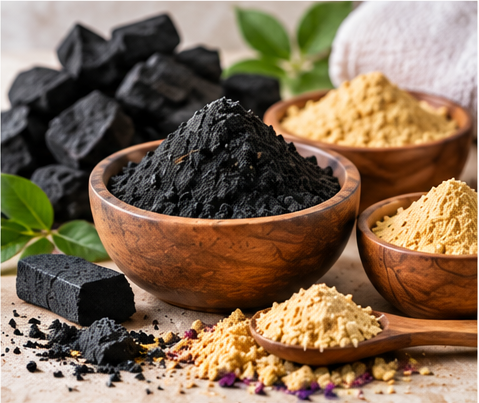
activated charcoal in Ubtan

Activated Charcoal in Ubtan: Why More Isn't Always Better

Learn what activated charcoal contributes to Ubtan and why using too much can create practical problems.

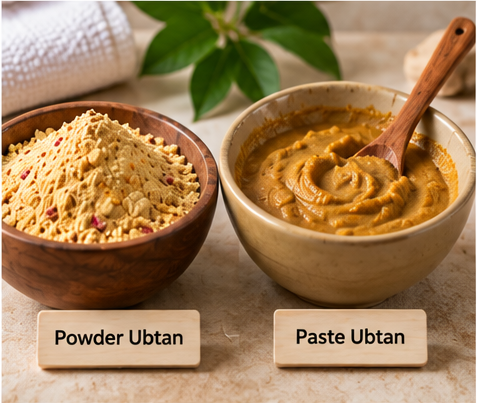
powder Ubtan vs paste Ubtan

Powder Ubtan vs Paste Ubtan: What's the Difference?

Compare powder and paste Ubtan and understand how adding water changes convenience, preservation and storage.

Scroll to Top