
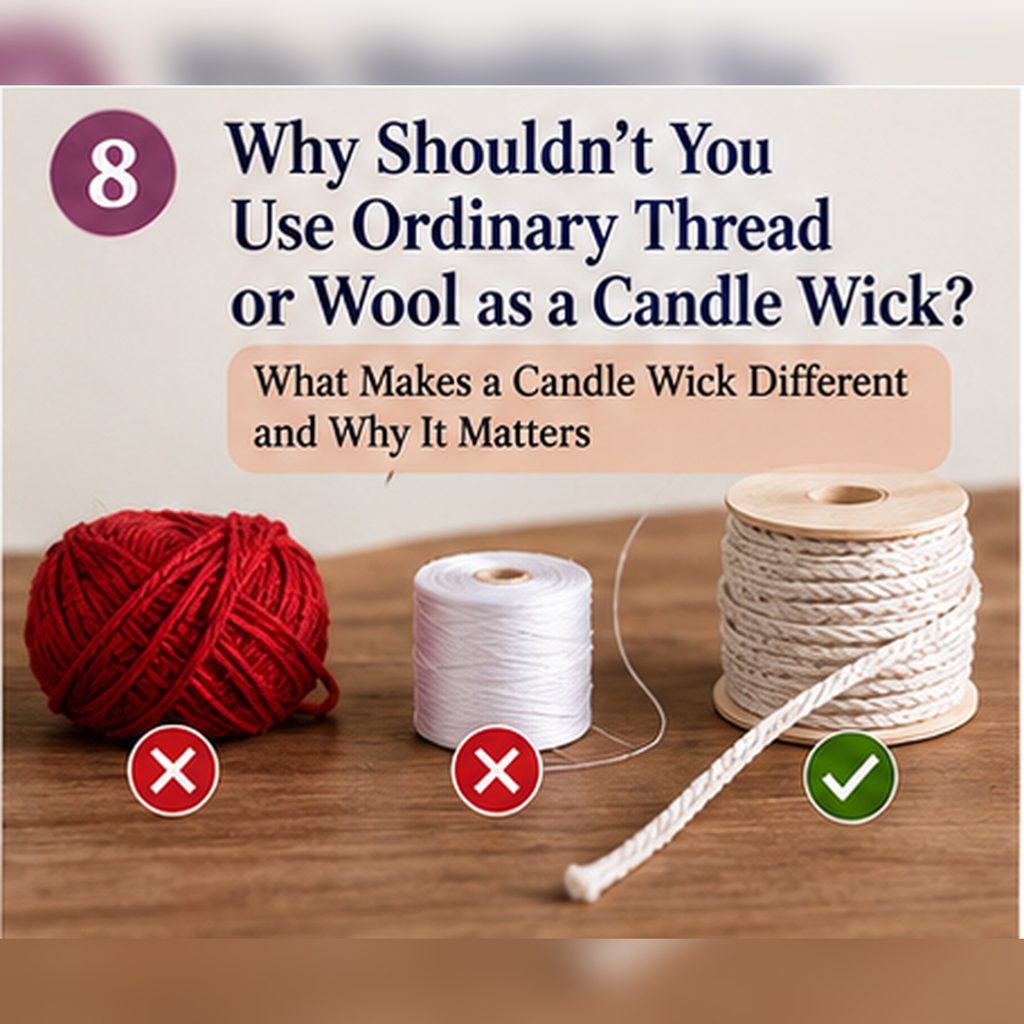
Why Shouldn’t You Use Ordinary Thread or Wool as a Candle Wick?
Ordinary thread or wool may catch fire, but that does not mean it will function properly as a candle wick. Learn why candle wicks need to be specifically made for controlled burning.
Ordinary thread or wool may catch fire, but that does not mean it will function properly as a candle wick. Learn why candle wicks need to be specifically made for controlled burning.

A proper wax pool helps a candle burn more evenly and supports better fragrance throw. Learn why an undersized melt pool can lead to tunnelling and weak scent performance.

The number of wicks a candle needs depends mainly on its width and how well the wicks can create a balanced melt pool across the surface.

Wick size directly affects how a candle burns. A wick that is too small can cause tunnelling, while an oversized wick can create excessive heat and melt too much wax.

Candle tunnelling happens when only the wax around the wick melts while the outer wax remains solid. Learn how wick size, candle width and melt-pool formation contribute to this common problem.